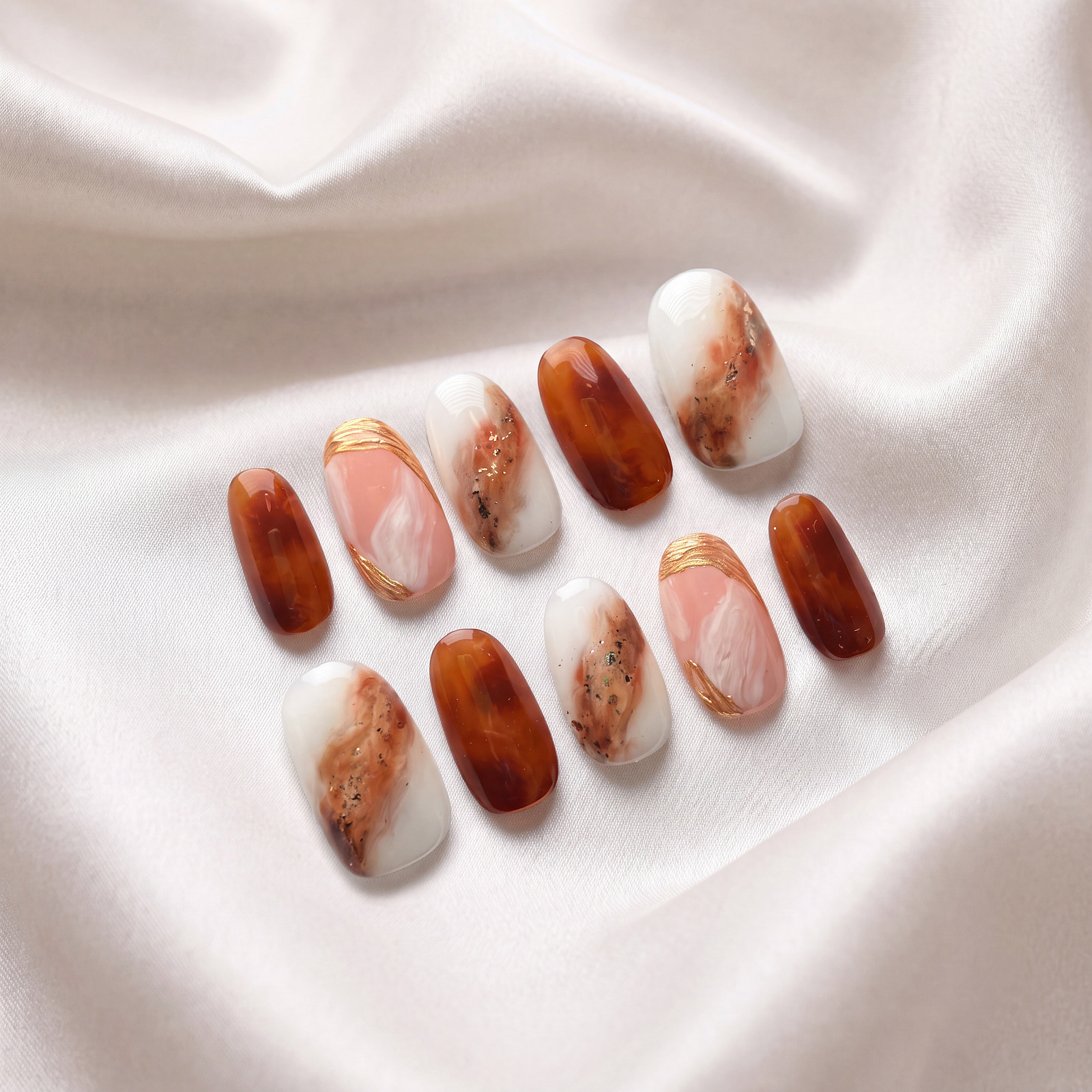
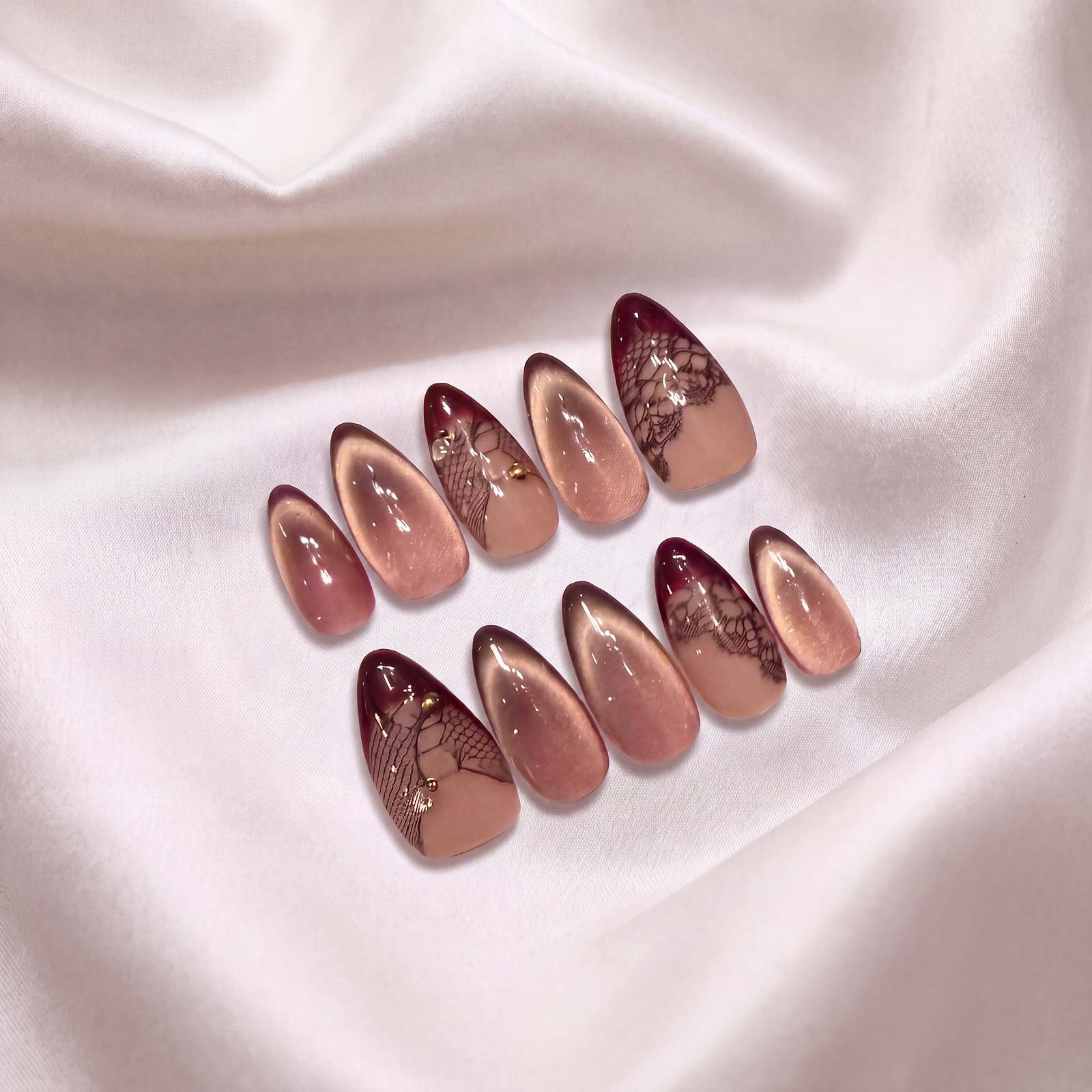
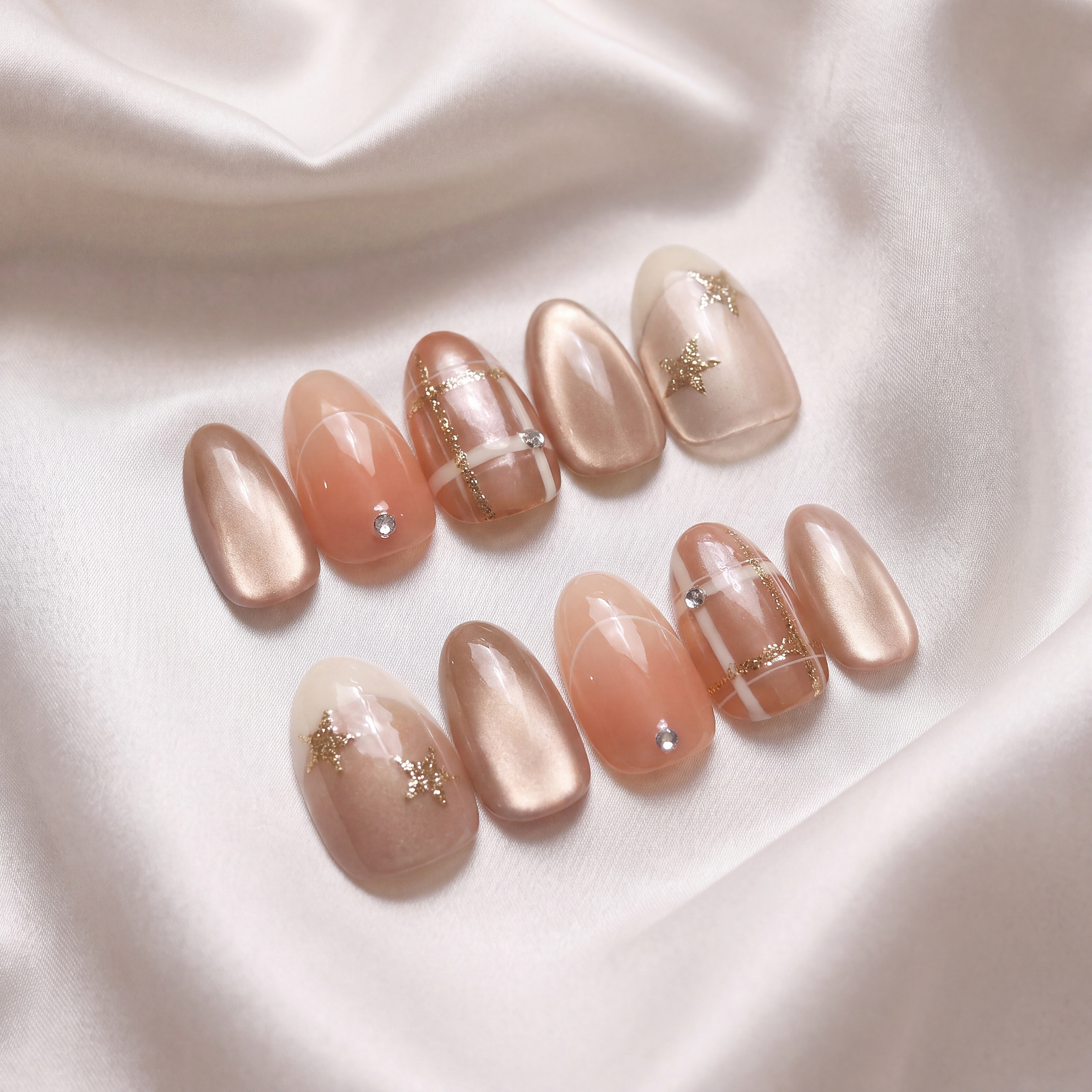
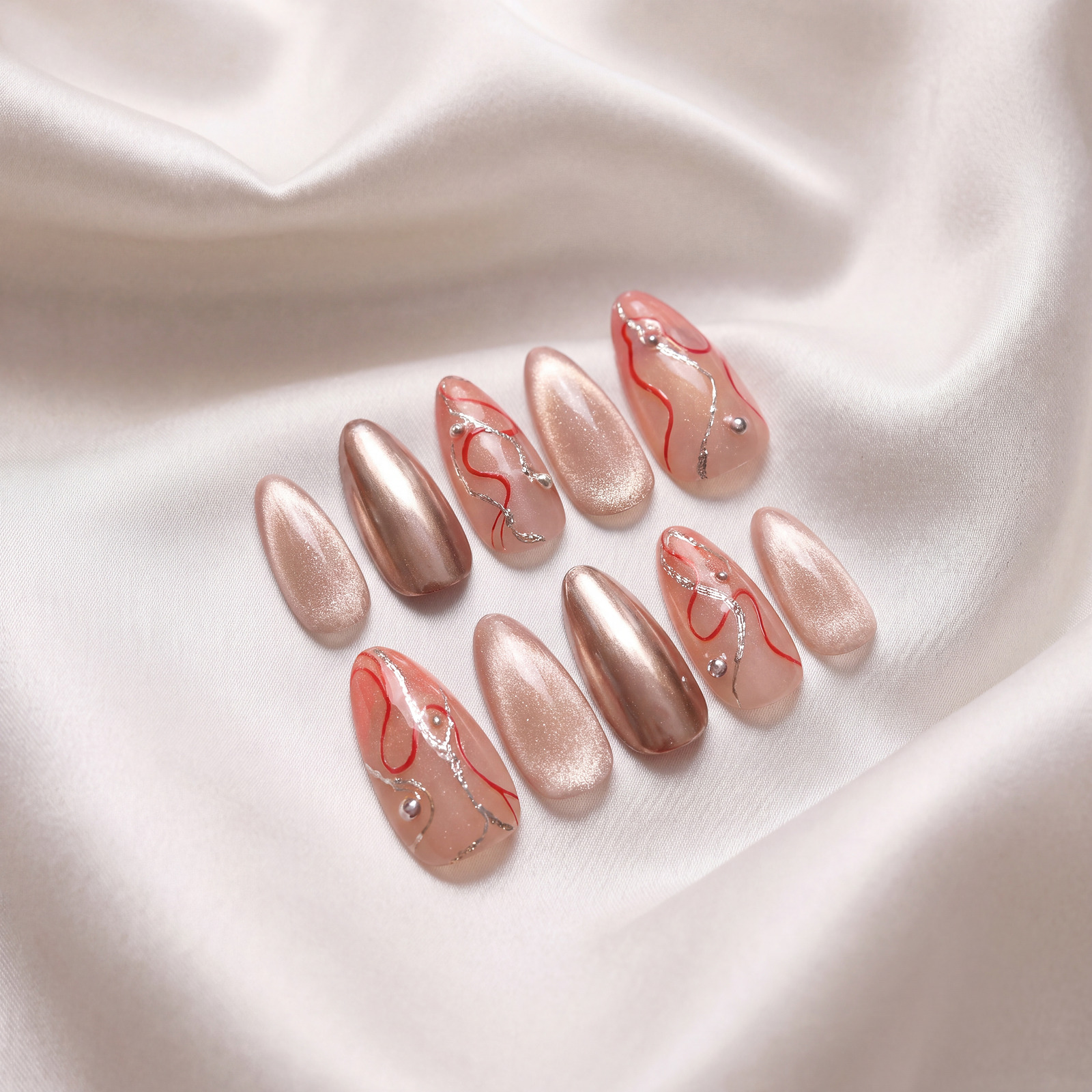

The Story
Fur first,
then flower
A tiger stripe laid onto dry lacquer has a cut edge, and a cut edge reads as ink. So the black goes down while the orange is still open, and the two are allowed to meet for about a second before the tip is cured — long enough for the boundary to soften by a hair, not long enough for the black to travel. That single hair of bleed is the whole difference between a stripe and a drawing of one.
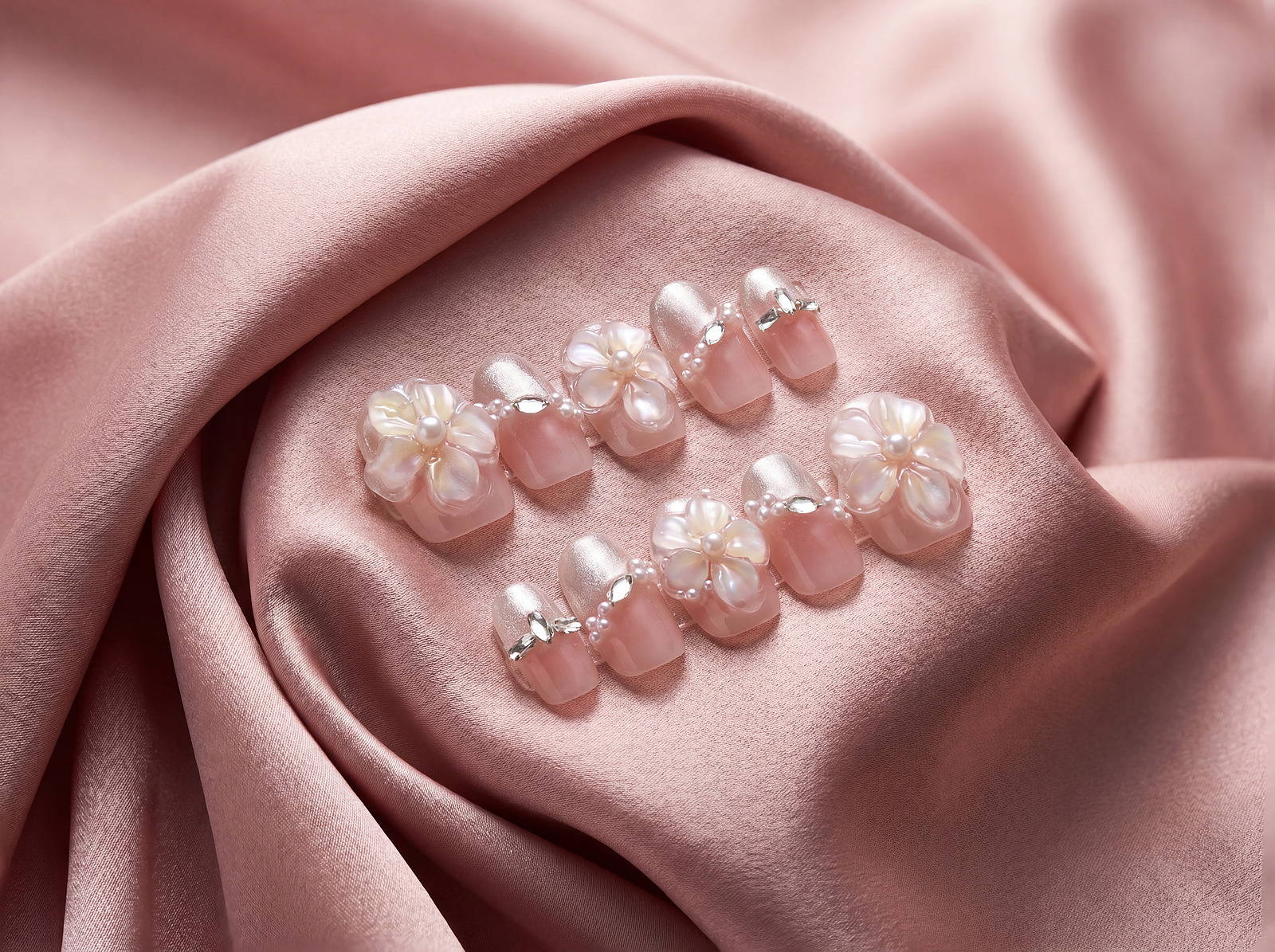
The lilies are turned petal by petal and curled while they are still soft, over the back of a needle, so each one falls open rather than standing up; the veins are drawn last with the same needle, which is why they run to the very tip of the petal instead of stopping short. The beds beneath them are left almost bare on purpose — a sculpted flower needs quiet around it or it becomes a pile — and the gold is set one bead at a time along the cuticle, graded from largest at the sidewall to smallest at the centre, so the eye is led toward the bloom rather than around it.
One hair of bleed is the whole difference.