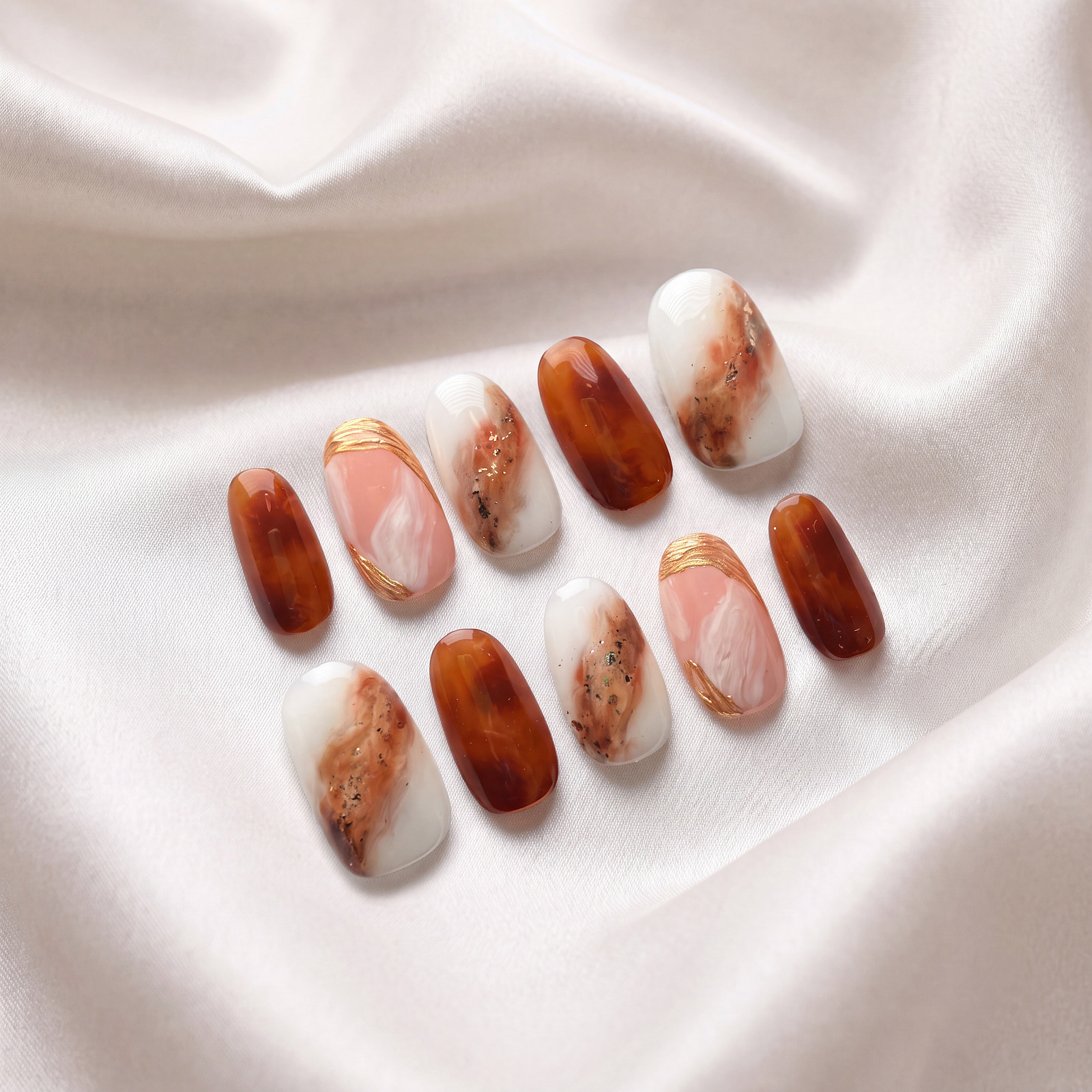
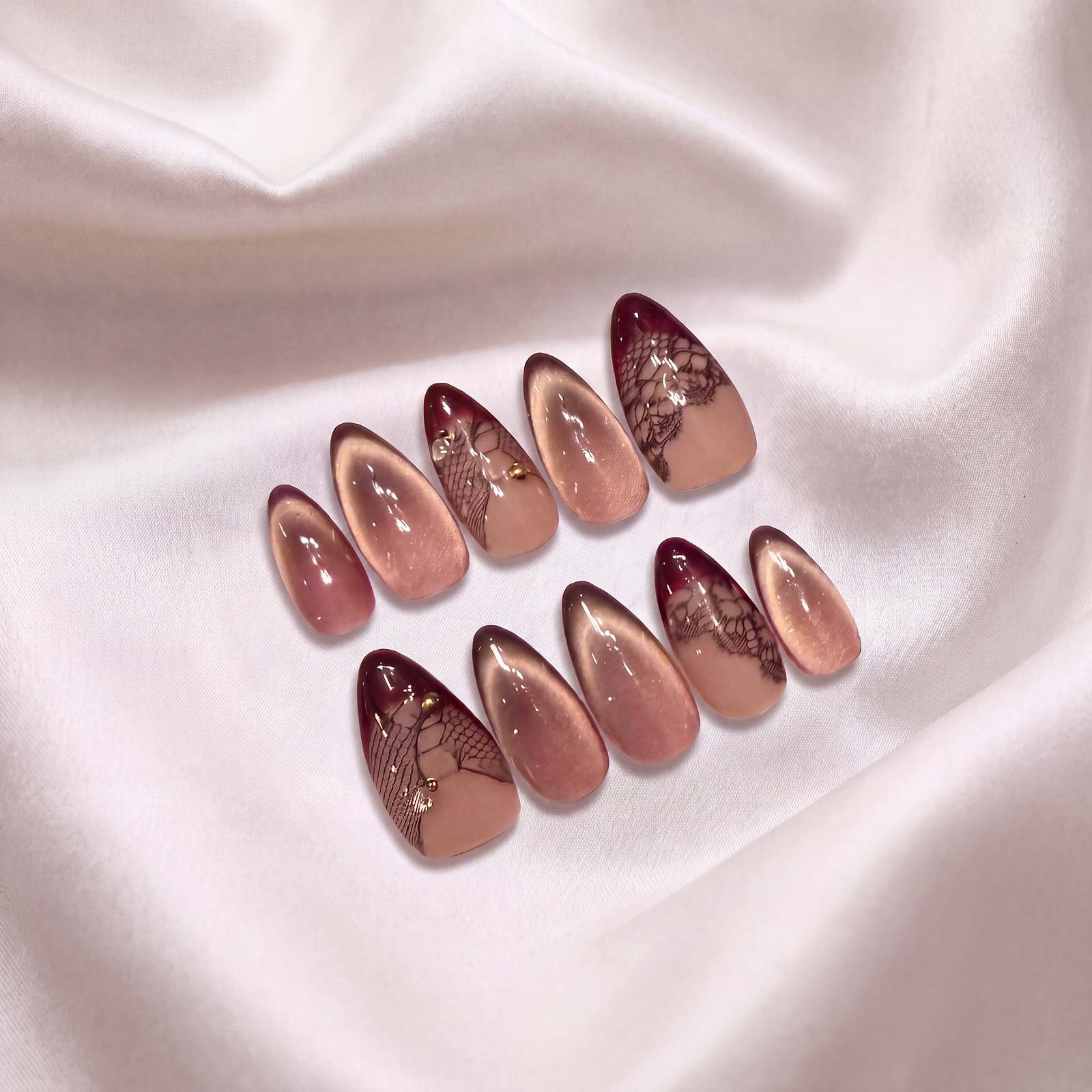
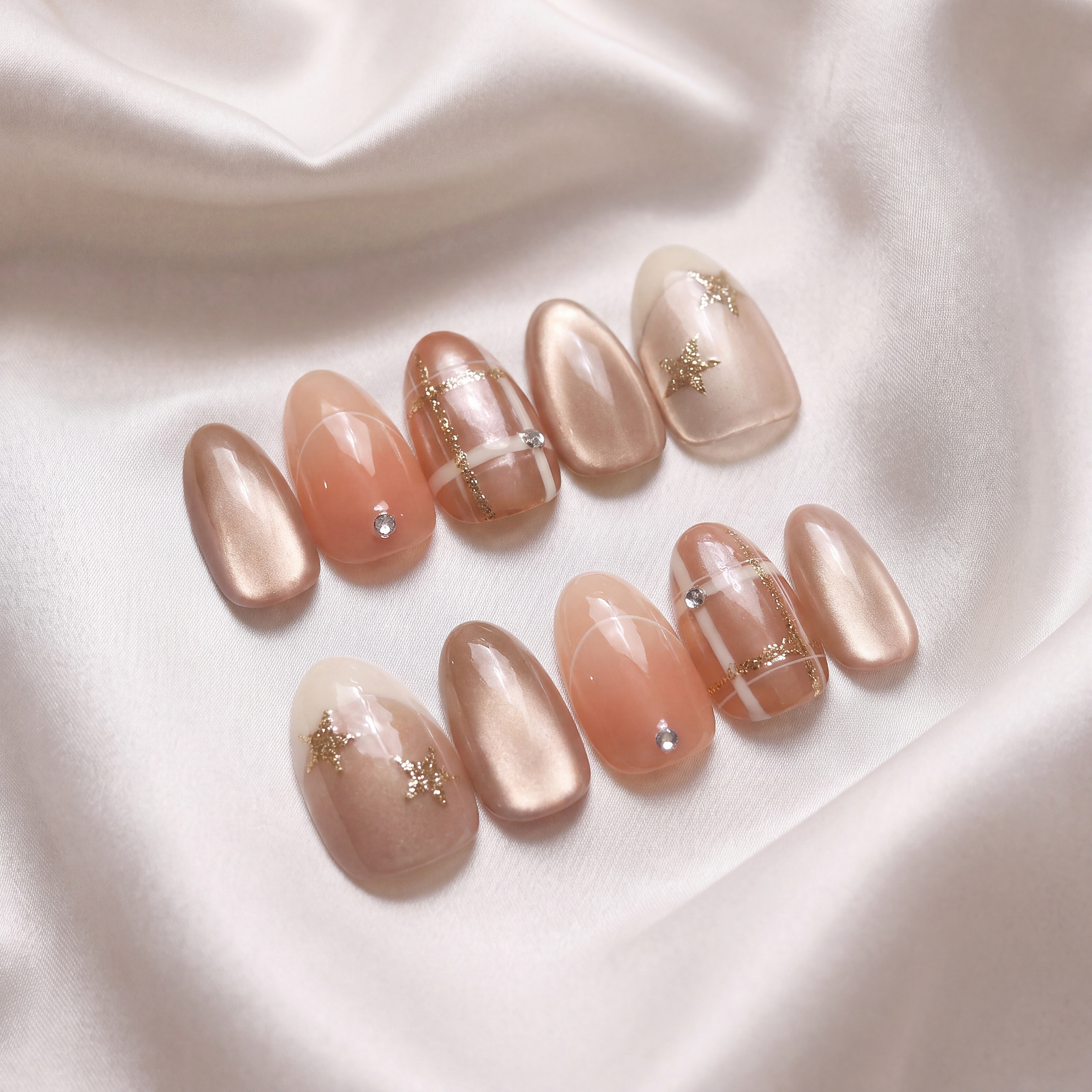
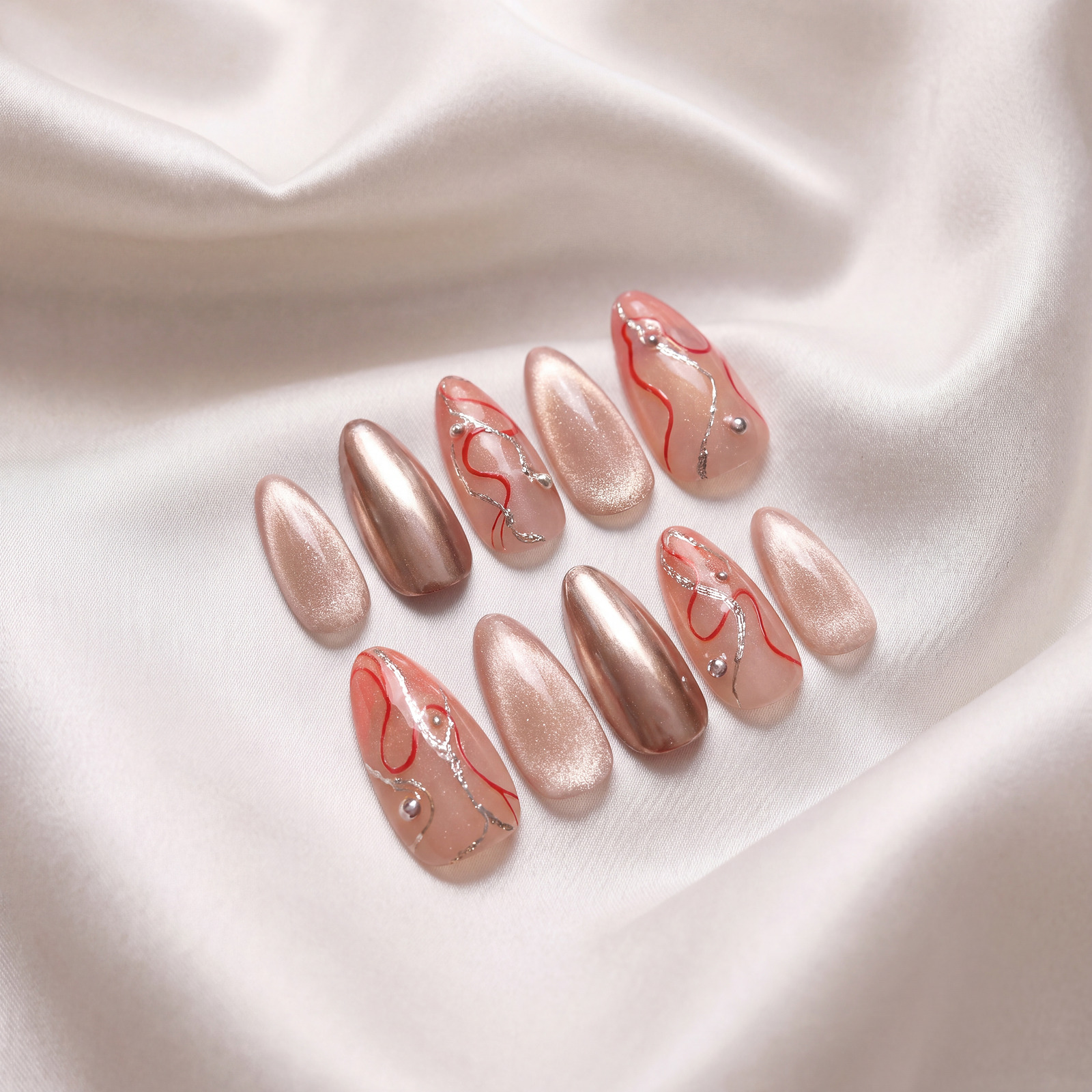

The Story
Warm metal,
cold moon
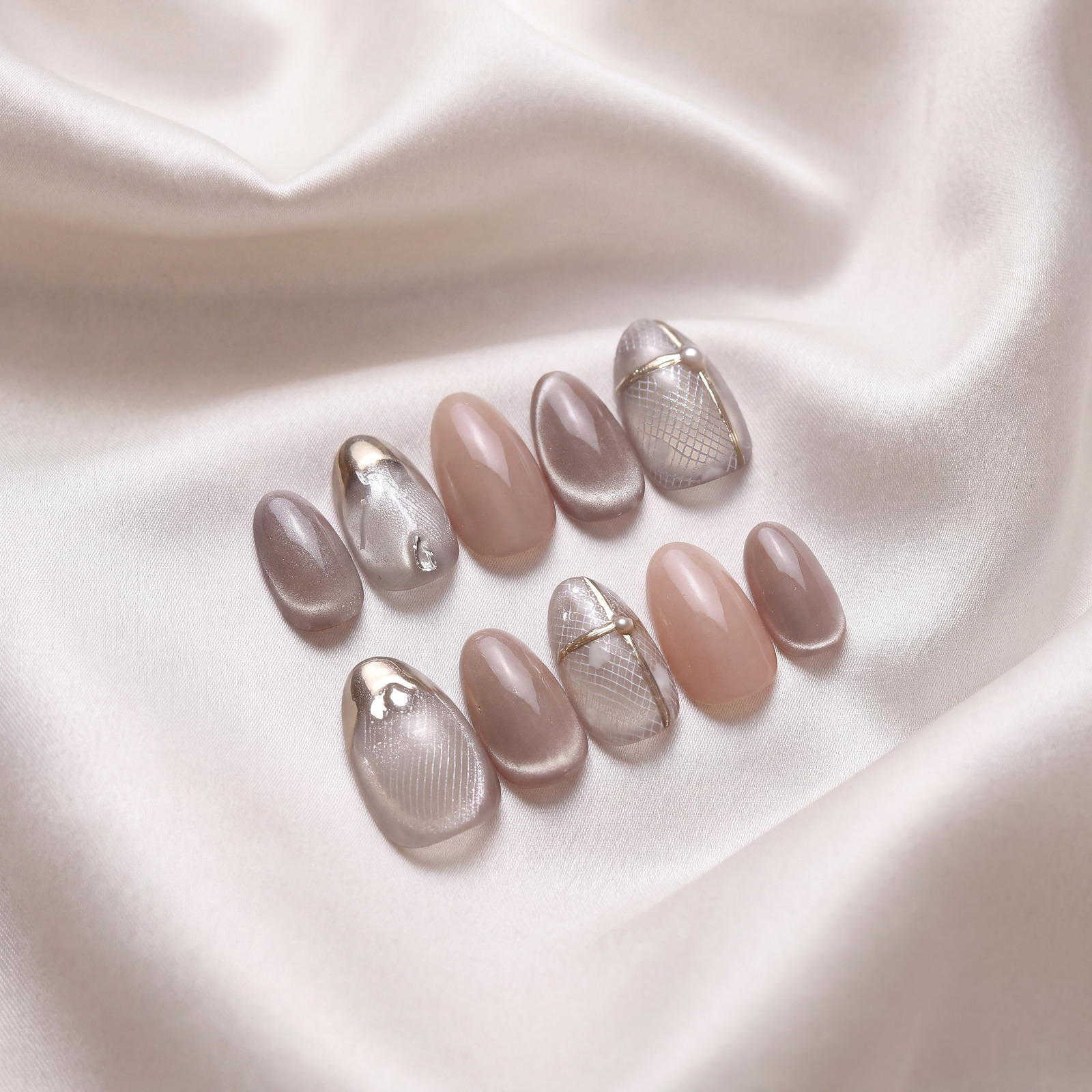
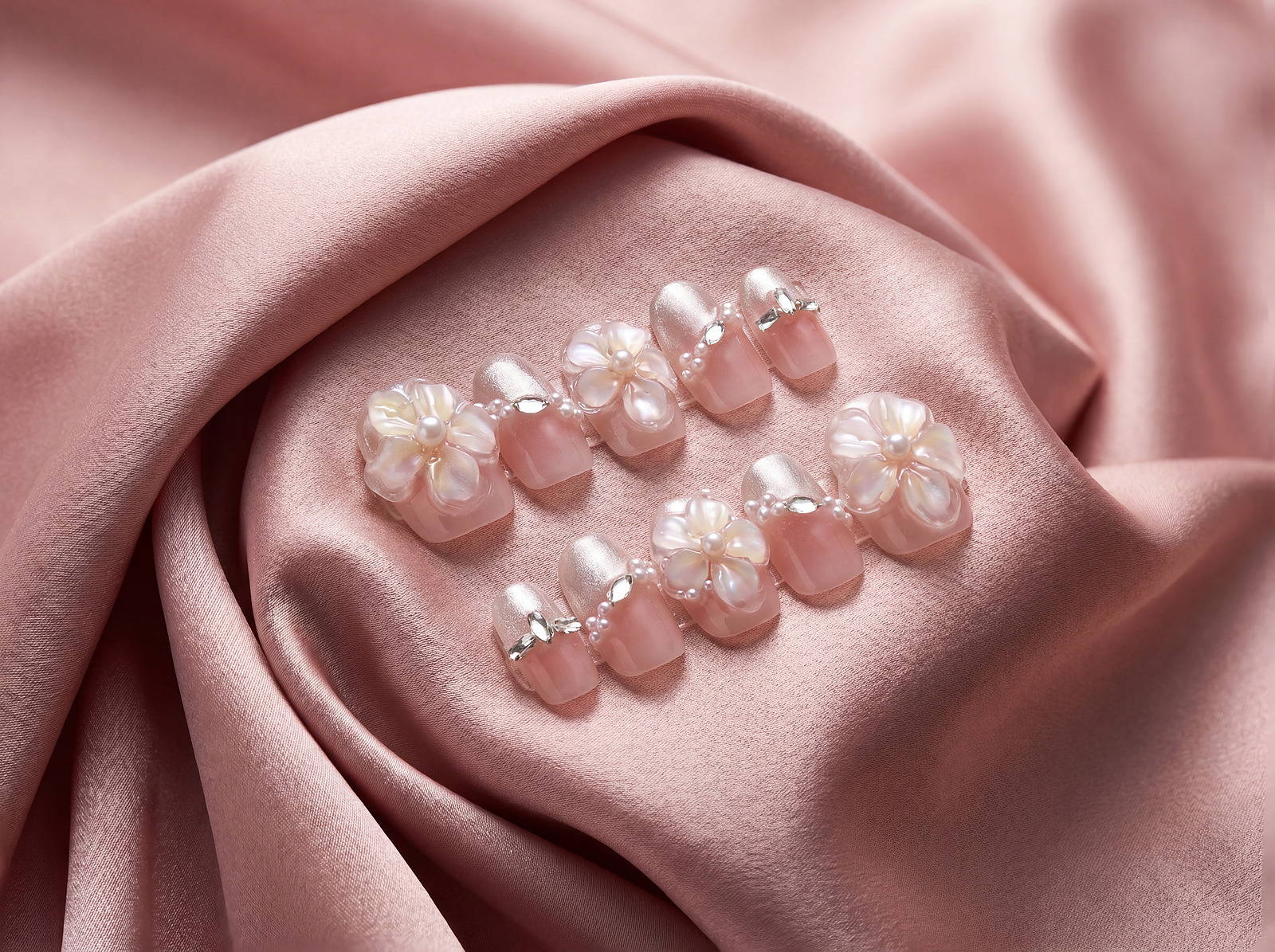
The idea came from an old photograph of a bronze observatory dome at twilight — the metal still holding the day’s heat while the first moon rose over it, blue and unbothered. Reproducing that meant refusing to match temperatures: the base had to stay warm bronze, and the ornament had to stay glacial. Most colourists will tell you not to do this. They are usually right.
The bronze is magnetised while liquid so a seam of light lies buried in the lacquer and travels as your hand turns. The moons are sculpted in pale blue gel and cured proud of the surface, then the stars are cut, set and burnished so their points sit flush. Held still, the set is metal; moved, it is a night sky.
Keep the metal warm and the moon cold — the argument is the design.