The Story
The line
we took away
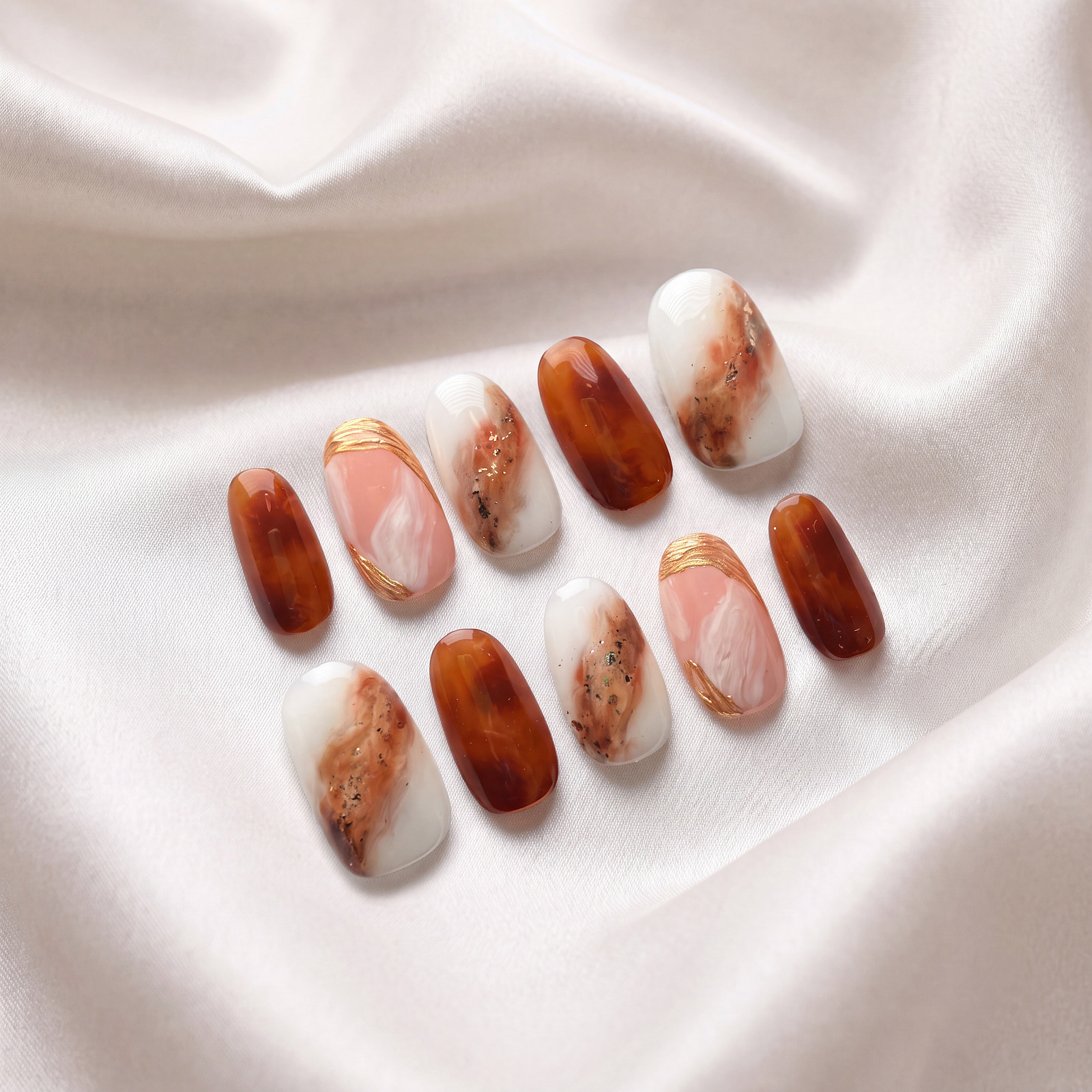
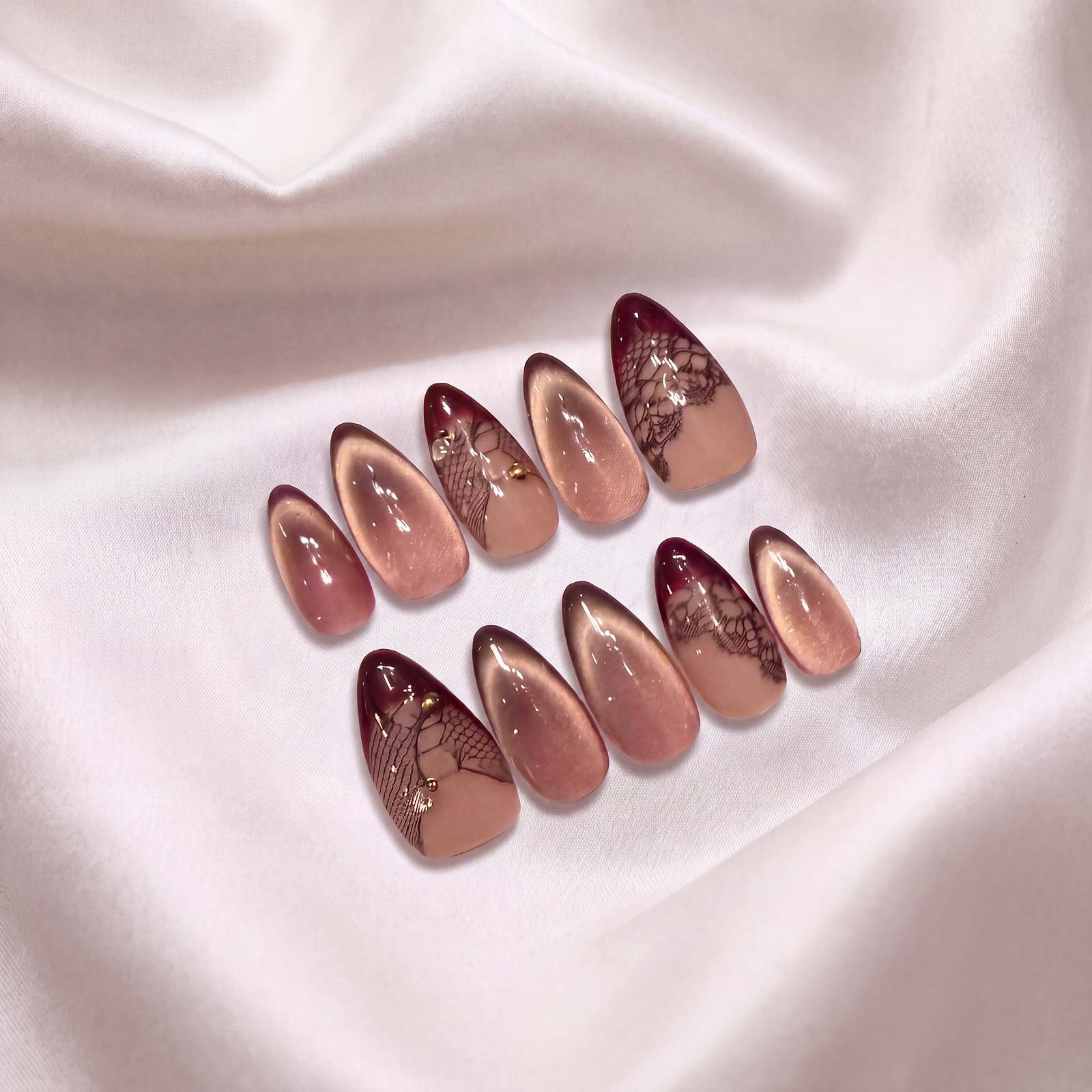
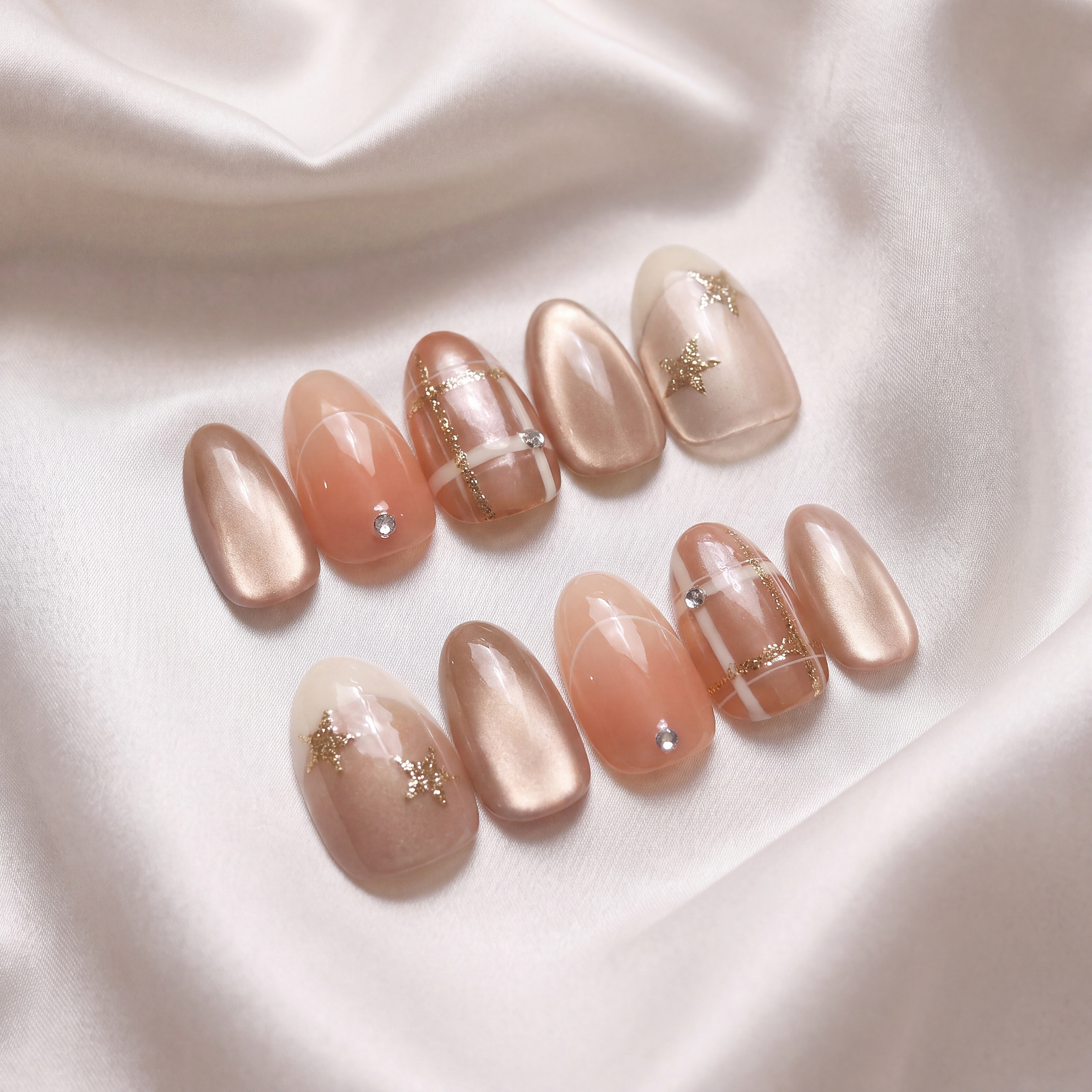
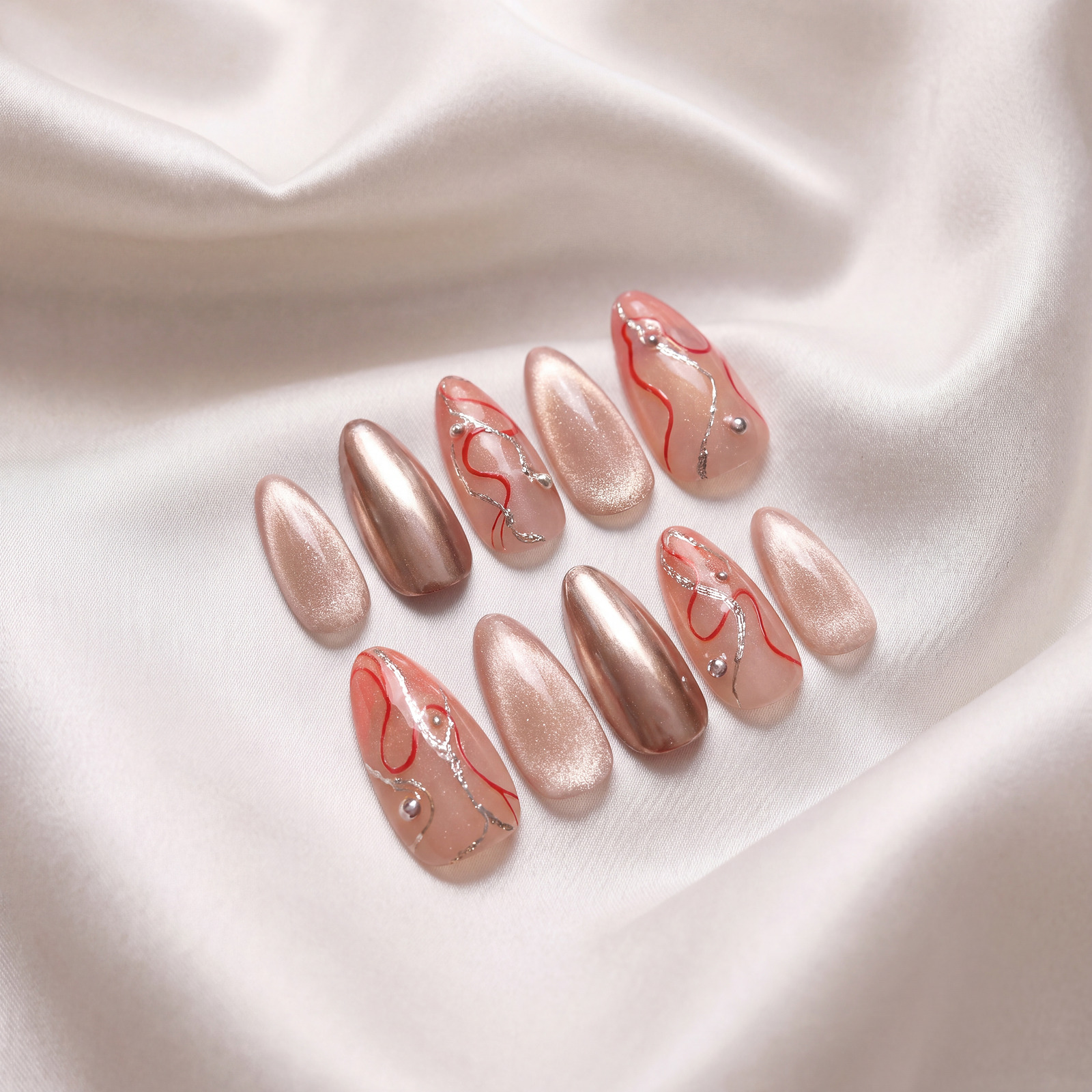
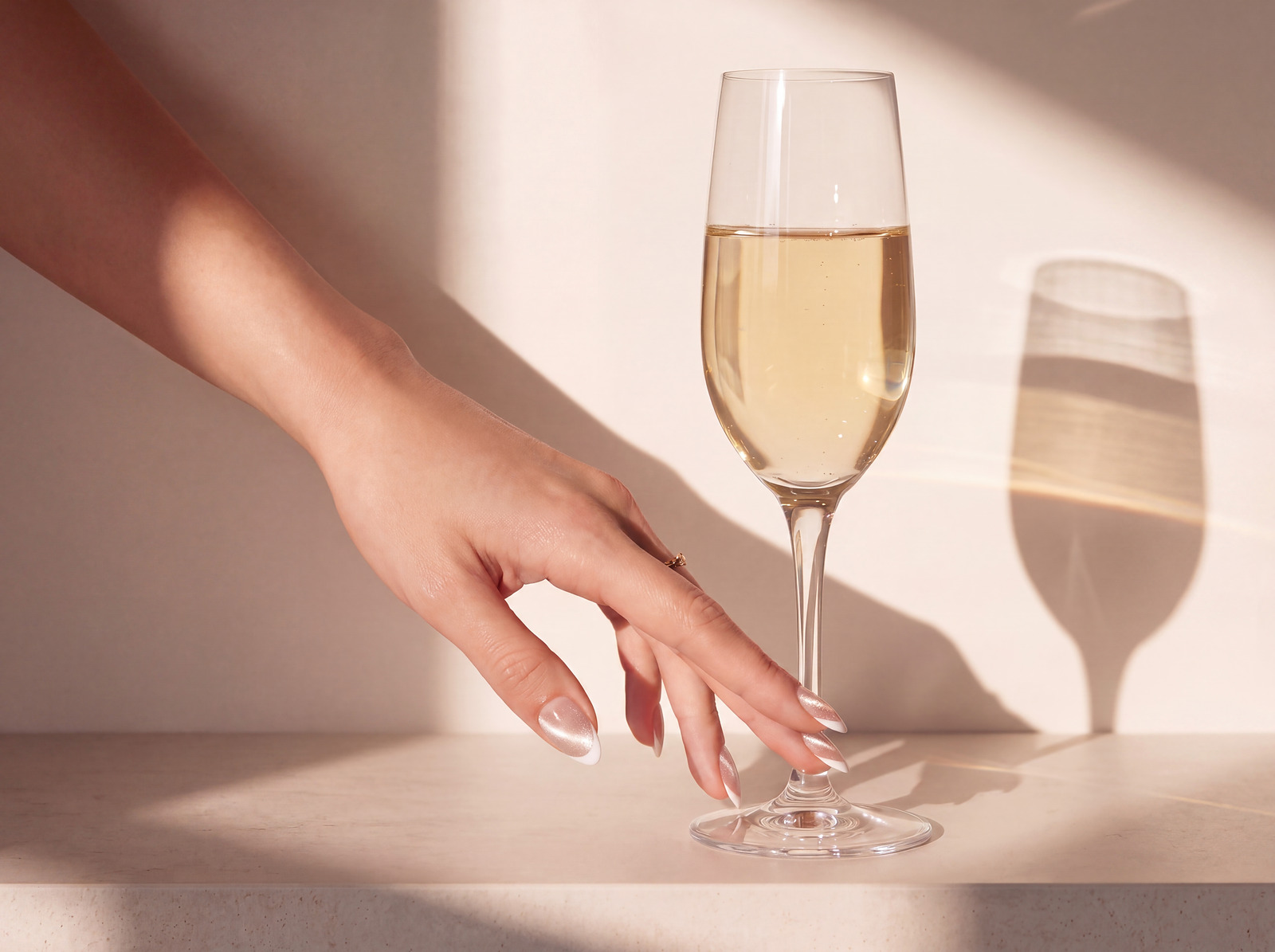
A traditional French is judged on its smile — the sharpness of the curve, the symmetry of the two walls. Ivory French is judged on the opposite quality: whether you can find the line at all. The ivory goes down first, short and generous, and is then softened backwards with a dry brush while it is still open, one direction only, until the boundary is a gradient six or seven millimetres deep. Done correctly it photographs as a single colour and reads, on the hand, as light.
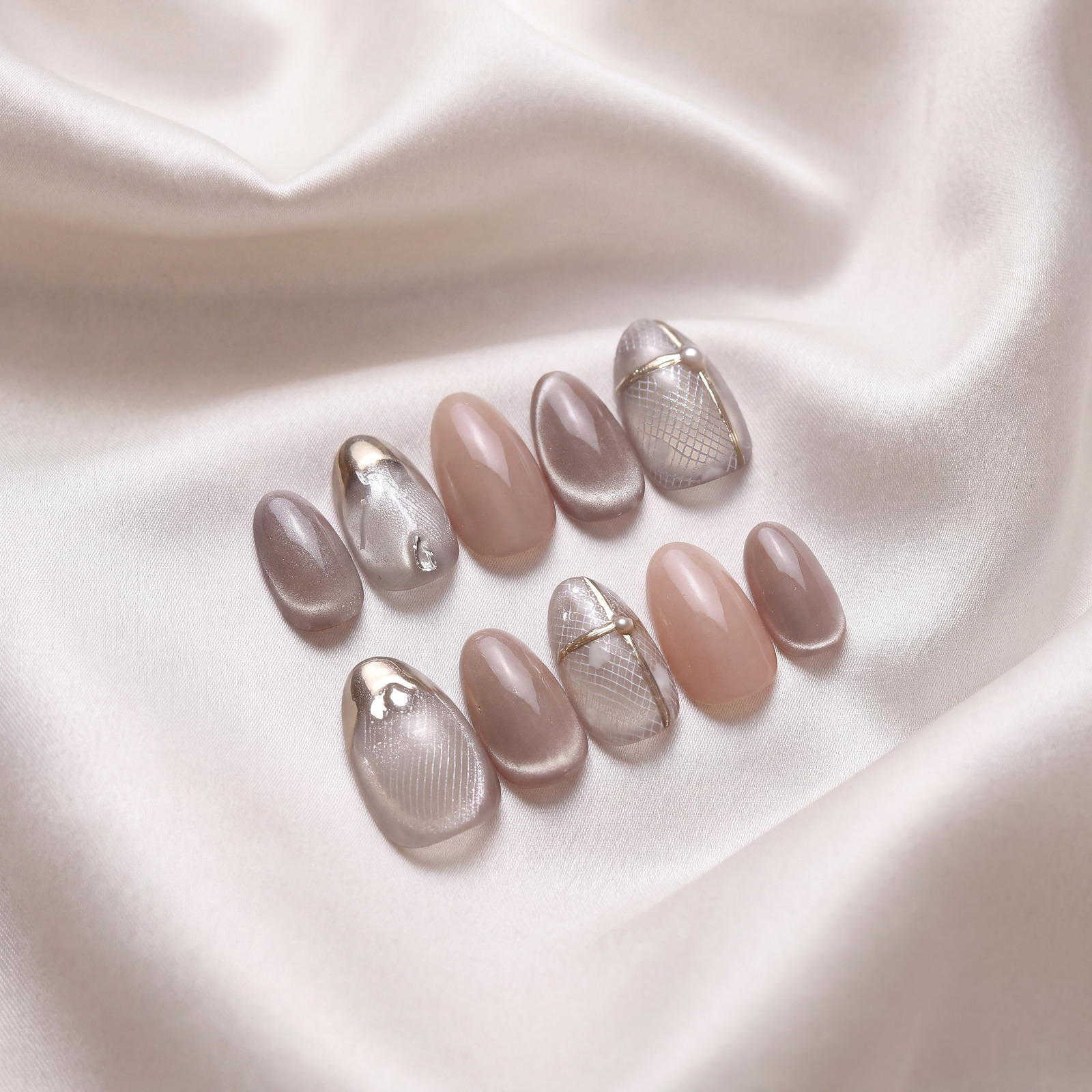
The bed underneath is not a nude. It is a warm nacre — the pearl that sits closest to the tone of skin — floated under nine sheer passes so it lifts as the hand moves instead of sitting flat. The ivory is mixed two degrees warmer than white for the same reason a pearl is never bleached: a cool tip announces itself at the cuticle, and this set is designed never to announce anything. Four silhouettes are cut from the same recipe and the blend is re-timed for each, because a stiletto gives the gradient twice the distance a squoval does.
The best French is the one you cannot point to.